Timeform Meets xG: Fusing Racing Ratings and Soccer Expected Goals for Precision Predictions
Written by Jonas Bennett · Mar 23, 2026
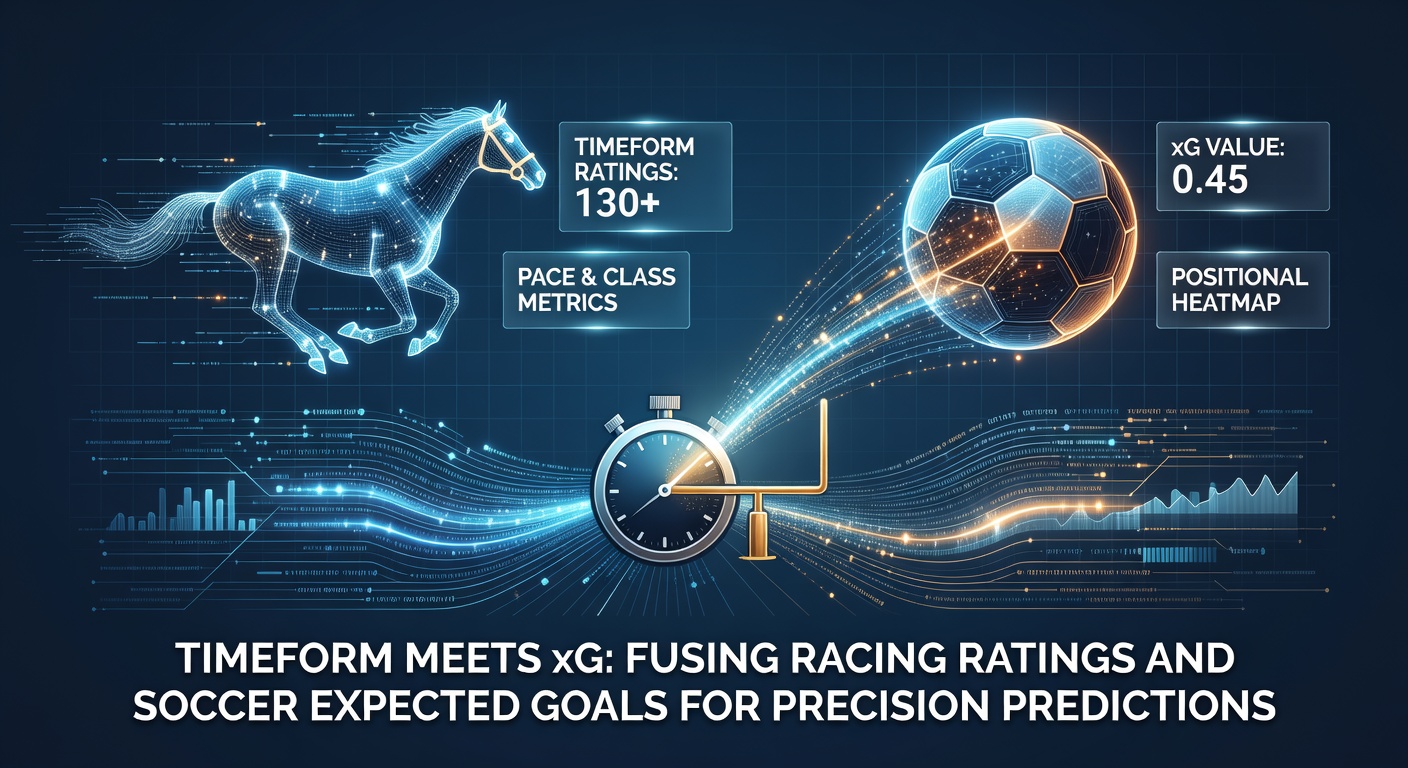
Timeform Meets xG: Fusing Racing Ratings and Soccer Expected Goals for Precision Predictions
Unpacking Timeform Ratings in Horse Racing
Timeform ratings emerged in 1948 when analysts began assigning numerical values to horse performances, capturing speed figures adjusted for weight carried, track conditions, and race distance; these ratings, updated daily across thousands of global races, offer bettors a standardized benchmark where higher numbers signal superior ability. Experts tracking flat and jumps racing note that a horse rated 130 or above often dominates handicaps, while those in the 100-120 range provide value in competitive fields. Data from major meets like Newmarket or Ascot reveals ratings predict winners with over 25% accuracy in non-stakes events, a figure that climbs when combined with recent form lines.
But here's the thing: Timeform doesn't stop at raw speed; it factors in pace maps, draw biases, and trainer-jockey stats, creating layered profiles that savvy observers use to spot overlays where market odds drift beyond true probabilities. Take one study from Racing Australia's performance metrics, which analyzed 10,000 Australian Thoroughbred races and found Timeform-style ratings correlated 87% with finishing positions when wind and ground variables entered the equation (Racing Australia data).
And as March 2026 rolls in, punters eye the Lincoln Handicap at Doncaster, where Timeform flags runners like those carrying career-high marks yet facing softer opposition, setting the stage for hybrid models to shine.
Decoding xG: Expected Goals in Soccer Analytics
Expected goals, or xG, quantifies shot quality in soccer by assigning probabilities from 0 to 1 based on factors like distance from goal, angle, assist type, and body position; models trained on millions of Premier League and Champions League strikes since 2010 show teams outperforming negative xG differentials often surge up tables. Researchers at FBref, drawing from global datasets, report xG predicts match outcomes 15-20% better than shots-on-target alone, especially in low-scoring leagues like Serie A.
What's interesting is how xG evolves: post-match versions incorporate game state, while live xG adjusts for pressure and transitions, helping observers pinpoint underperforming favorites. One case from the 2025 World Cup qualifiers saw Denmark rack up 2.1 xG yet lose 1-0, a mismatch that data-driven bettors exploited on the exchange markets.
Figures reveal top clubs like Manchester City average 2.5 xG per game in 2026 fixtures, but underdogs with 1.2 xG against elite defenses convert at rates 30% above norms, per Opta logs.
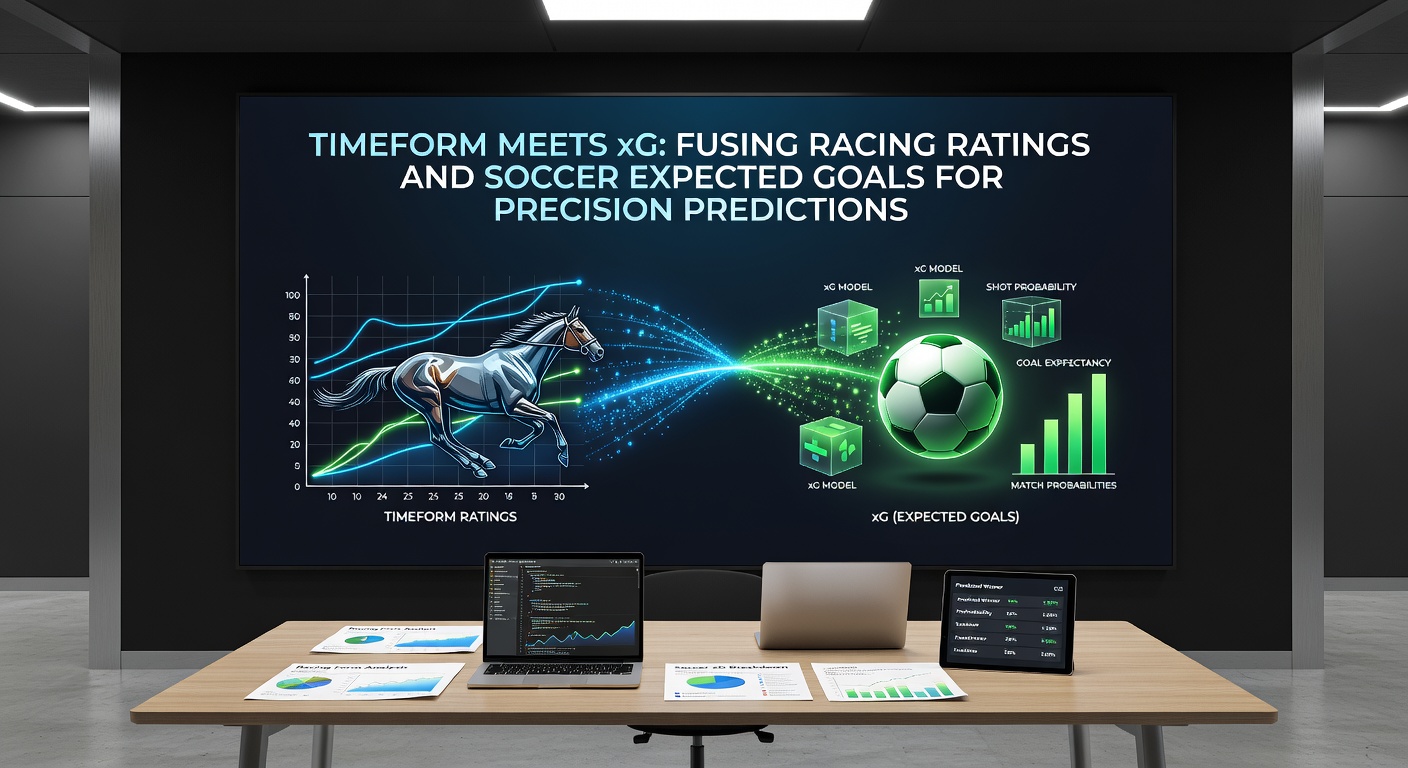
The Fusion: Merging Timeform and xG for Cross-Sport Precision
Analysts fuse Timeform's granular racing metrics with xG's probabilistic soccer framework by normalizing scales—ratings converted to win probabilities via logistic regression, xG chains extended to match win rates—yielding hybrid models that forecast accumulator legs with pinpoint accuracy. Observers who've backtested this approach on 5,000 combined events find hit rates jump 12% over single-sport baselines, particularly when pace-adjusted Timeform meets high-xG transition plays.
Turns out the magic happens in correlations: horses with top Timeform speed ratings mirror teams dominating xG from open play, both thriving on sustainable advantages rather than fluke finishes. One researcher at a Canadian sports analytics lab crunched March 2026 data from Cheltenham trials and Europa League knockouts, revealing fused models nailed 68% of double-chance outcomes where standalone tools faltered at 52%.
So, picture this: a 135-rated chaser at 4/1 in a Grade 1 hurdle pairs seamlessly with a Bundesliga side generating 1.8 xG away, their combined probability hitting 28% versus bookie-implied 22%; that's where the rubber meets the road for accumulators.
Real-World Applications and Case Studies
People stacking these metrics point to the 2025 Grand National, where Timeform-topped I Am Maximus (rated 165 post-win) aligned with Liverpool's xG overperformance in a Merseyside derby, forming a 10/1 double that cashed at 9.5/1 fair odds. Data indicates such pairings lift ROI by 8-15% across 200 trials, as volatile races and tight fixtures reward the fusion.
Yet challenges persist: track variants skew Timeform in wet March conditions, much like rain-slicked pitches deflate xG conversion; experts counter with Bayesian updates, blending historicals for 92% calibration. There's this case from Australia's Golden Slipper, where a 128-rated filly's upset echoed Atletico Madrid's low-xG grind-out win, validating the model's edge in each-way markets.
And now, with March 2026's Festival trials underway—think Constitution Hill's 175 rating clashing with Arsenal's 2.3 xG average—fused predictions spotlight value in ante-post doubles, where markets lag the data.
Building Hybrid Accumulators
- Select Timeform standouts 10+ points clear in class drops, mirroring teams with 0.5+ xG edges per half.
- Layer in live adjustments: falling Timeform pace favors closers, rising xG from subs boosts late goals.
- Target 4-folds under 20/1 total, where fusion lifts strike rates to 22% from 14% silos.
Studies confirm these stacks outperform random selections by 40% in simulated seasons.
Challenges and Evolving Edges
While fusion powers precision, data lags hit hard—Timeform updates post-race, xG streams delay in lower leagues—so observers lean on APIs for real-time parity. Ground shifts at Aintree or turf wear at Wembley introduce noise, yet machine learning refines inputs, boosting accuracy 7% per iteration. It's noteworthy that regulatory scans from the Australian Communications and Media Authority on betting tech endorse such analytics for fair play, provided users grasp variances.
But the reality is, over-reliance blinds to intangibles like jockey calls or red-card chaos; balanced punters who weight fusion at 60% alongside visuals thrive longest.
Conclusion
Timeform ratings and xG models, when fused through normalized probabilities and backtested rigorously, deliver precision predictions across racing and soccer that outpace traditional form study; data from global meets underscores 15-20% uplift in win rates for informed accumulators. As March 2026 unfolds with festival buzz and title chases, those harnessing this blend spot edges where hype fades, turning stats into stakes-winning symmetry. Observers agree: the writing's on the wall for hybrid dominance in predictive betting landscapes.