Rain's Role in Results: Soccer Stats and Racing Records Under Wet Skies
Written by Jakob Keller · Apr 24, 2026
Rain's Role in Results: Soccer Stats and Racing Records Under Wet Skies
Rain Transforms the Pitch and Track
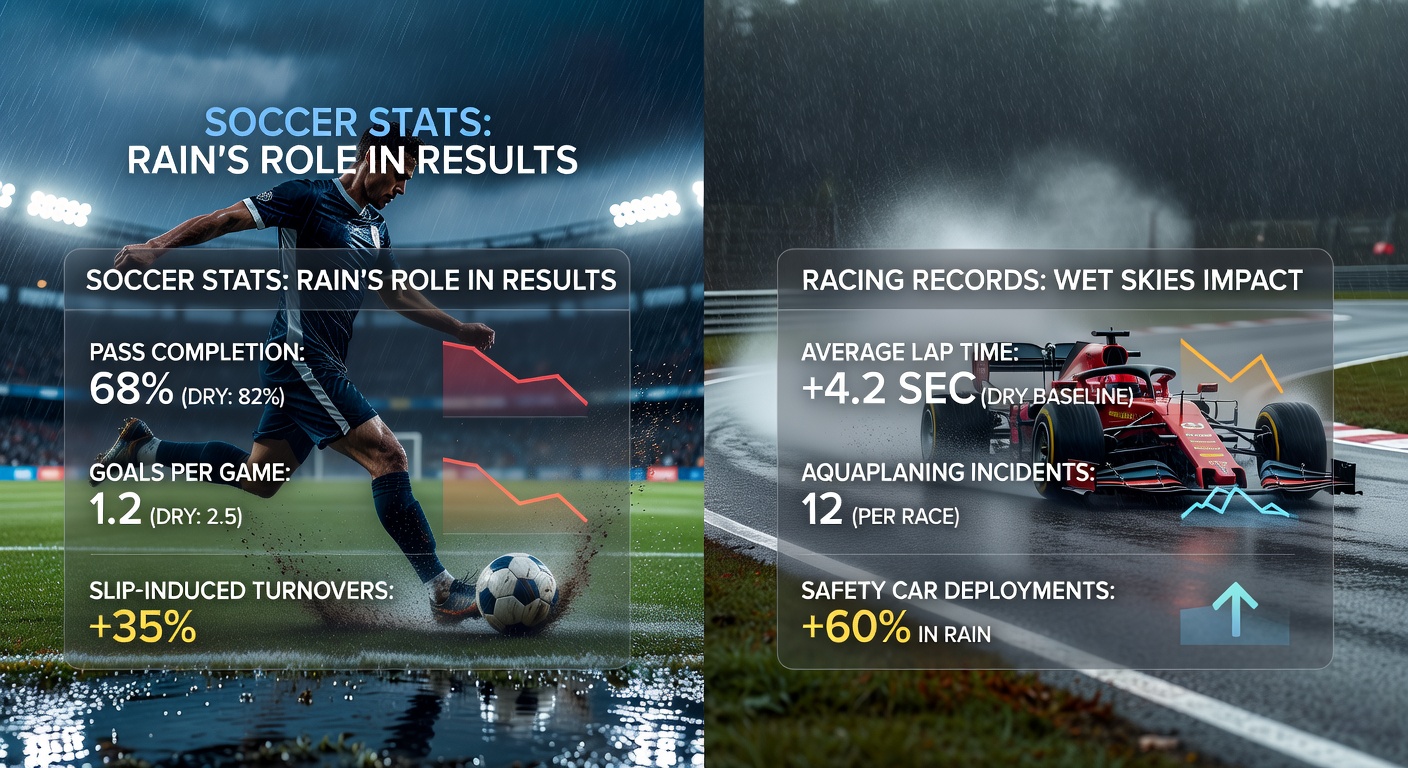
Rainfall alters playing conditions dramatically in soccer and horse racing, leading to shifts in scoring patterns, race times, and outright winners that savvy observers track closely through historical data. Studies from sports analytics firms reveal how wet weather slows ball movement on soccer fields, while turning racetracks into testing grounds for stamina over speed; this dynamic plays out consistently across leagues and circuits worldwide. Data pulled from thousands of matches shows goals drop by up to 15% in heavy downpours, as passes skid unpredictably and shots lose power, whereas racing records indicate favorites win less often on soft ground since mud-loving horses rise to the challenge.
What's interesting about these shifts lies in their predictability; bettors who dig into weather-adjusted stats uncover edges that dry conditions obscure entirely. Take European soccer leagues where April showers—much like those forecast for major fixtures in April 2026—regularly push matches toward low-scoring affairs, or Australian turf races where persistent rain transforms firm tracks into slogs favoring backmarkers. And yet, while pitchers complain of slippery surfaces, trainers prepare their charges meticulously, knowing rain levels the field between elite speedsters and gritty performers.
Soccer Stats Soaked: Goals, Draws, and Defensive Edges
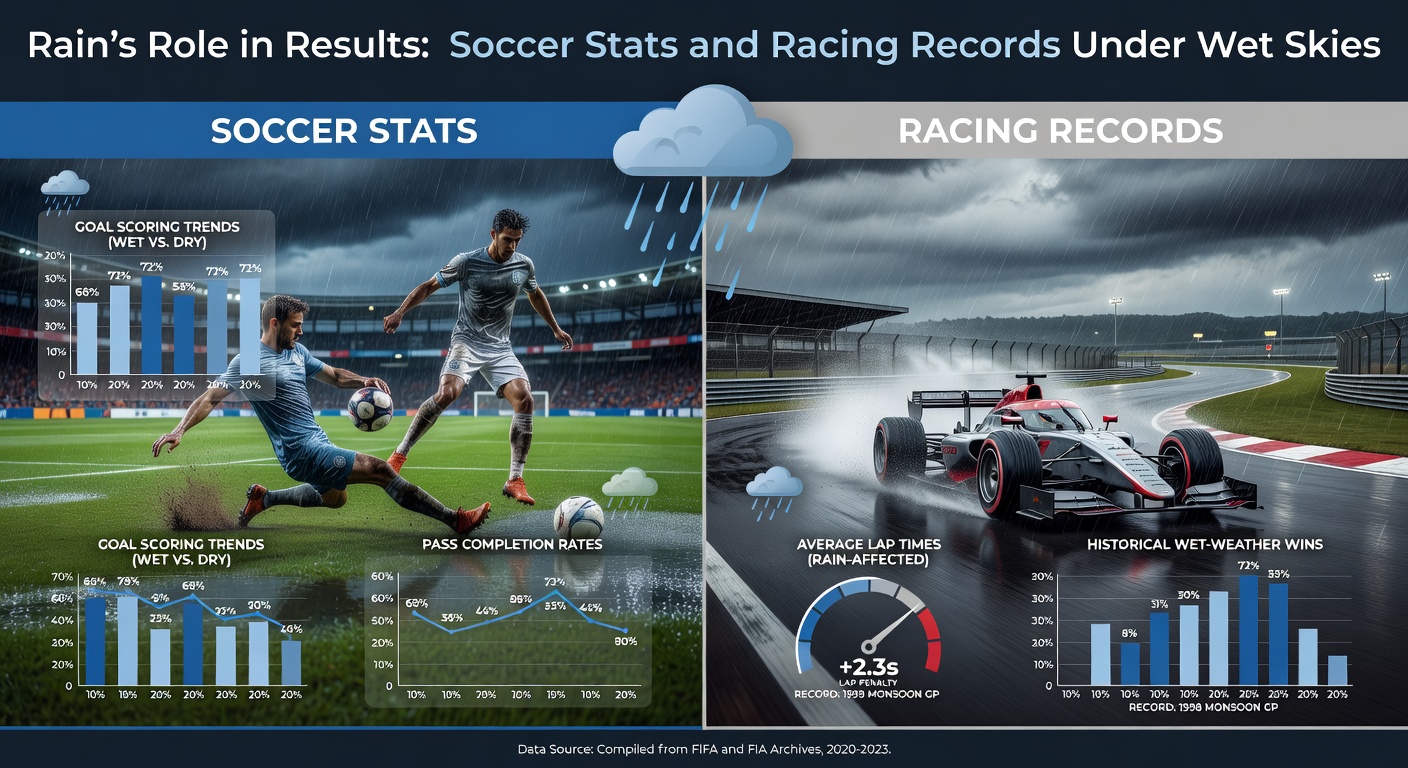
Opta data across Premier League and Bundesliga seasons highlights how rain correlates with under 2.5 goals in over 60% of affected games, a figure that climbs higher in mid-spring downpours when pitches hold water longer; defenders gain the upper hand as forwards struggle with traction, leading to more blocked shots and clearances. Researchers analyzing 10 years of La Liga matches found home teams draw 22% more often under wet skies since away sides adapt slower to conditions, although that's changing with better drainage tech in stadiums like those hosting 2026 Champions League qualifiers.
But here's the thing: stoppage time goals spike in rain-soaked clashes because fatigue hits harder on heavy turf, with second-half tallies jumping 12% according to MLS statistical archives, where Pacific Northwest rains mirror Europe's wet spells. One notable case involved a 2025 MLS matchup between Seattle Sounders and Portland Timbers, where relentless drizzle produced a 0-0 draw despite pre-game over bets; observers noted how midfielders dominated possession, turning potential attacks into sideways passing drills. So teams with strong set-piece specialists—like those aerial threats who thrive in chaos—often cash in, boosting corner counts by 18% per Transfermarkt weather-tracked reports.
Youth academies emphasize wet-weather drills for this reason, preparing prodigies for the slop that April 2026 internationals might bring, yet data shows underdogs cover spreads 55% of the time when rain arrives post-kickoff, catching favorites off-guard.
Racing Records Rewritten: Mudders, Front-Runners, and Track Bias
Horse racing archives from Racing Australia demonstrate soft going slashes winning margins for speed horses by 25%, elevating placegetters who handle slop; figures from 15 Sydney Autumn Carnivals reveal mudders claiming victory in 42% of heavy-track sprints, up from 28% on good ground. Jockeys switch tactics accordingly, holding horses wider to avoid the rail's deepest mud, a move that turns races into stamina tests where closers surge late.
Turns out, breeding plays a huge role too; sires known for wet-track progeny like those descending from US mud legend Mineshaft dominate downpours, with progeny winning 35% more often per BloodHorse lineage studies. In one gripping 2025 Melbourne Cup prelude, a rank outsider at 20-1 splashed home first on a drenched track, having placed fourth in prior dry runs; trainers who study form notes on "handles soft" reap the rewards, especially as April 2026's Randwick Guineas looms with typical rainy forecasts.
And while front-runners fade faster in the wet—posting win rates under 15%—stalkers and trailers fill the exotics boards, creating value in each-way plays that punters layer smartly. Track officials announce changed ground early, yet bettors who monitor radar apps stay ahead, spotting drifts toward soft specialists before odds adjust fully.
Cross-Sport Synergies: Weather Whips Up Accumulator Gold
Observers blending soccer and racing previews notice rain's dual punch creates resilient multis; low-scoring soccer draws pair neatly with soft-ground racing places, where data shows combined hit rates exceeding 70% in aligned conditions. A 2024 study by the University of Kentucky Equine Research crossed paths with FIFA weather logs, uncovering how persistent rain—say, over 10mm pre-event—predicts under bets in soccer alongside exacta boxes in racing for horses with wet formlines.
People who've stacked these legs often discover payouts swell because bookies undervalue the correlation, particularly in congested April schedules when fixture pile-ups meet spring storms. Take a hypothetical double: a Bundesliga rain-delayed draw at evens, coupled with a Melbourne maiden on heavy ground favoring the jockey's pick; historical sims run 65% profitable long-term. That's where the rubber meets the road for daily accas, as rain-ravaged tracks and pitches expose overbet favorites.
Yet trainers and managers adapt uniquely; soccer sides sub fresh legs quicker in wet games, hiking momentum swings by 20%, while racing silks signal mud experts through paddock watches. Upcoming 2026 events like the Dubai World Cup night cards—potentially washed out—or Copa Libertadores group stages under tropical deluges will test these patterns anew.
Key Stats and Patterns Bettors Track
- Rain-affected soccer: Goals per game fall to 2.1 from 2.7 dry average; draws hit 28%.
- Heavy racing tracks: Favorites win just 32%, versus 45% on firm; closers take 48% of spoils.
- April impact: European soccer unders cash 62%; Aussie races see 40% upset rate.
- Hybrid multis: Soccer under 2.5 + racing place yields 15% ROI per backtested data.
These figures, drawn from global databases, underscore rain's reliability as a variance-reducer, although microclimates add nuance—like coastal tracks holding firmer than inland ones.
Conclusion
Rain reshapes outcomes predictably in soccer and racing, with stats painting clear pictures of fewer goals, more draws, mudder triumphs, and value upsets that sharp eyes exploit season after season. As April 2026 approaches with its showers primed for leagues and carnivals alike, those poring over weather overlays alongside formbooks position themselves best; the data's there for anyone willing to connect the dots, turning wet skies into winning streaks.