Harnessing Biomechanical Tracking Data Across Gridiron Matches and Equine Events to Refine Layered Selection Frameworks
Written by Ben Keller · Jun 19, 2026
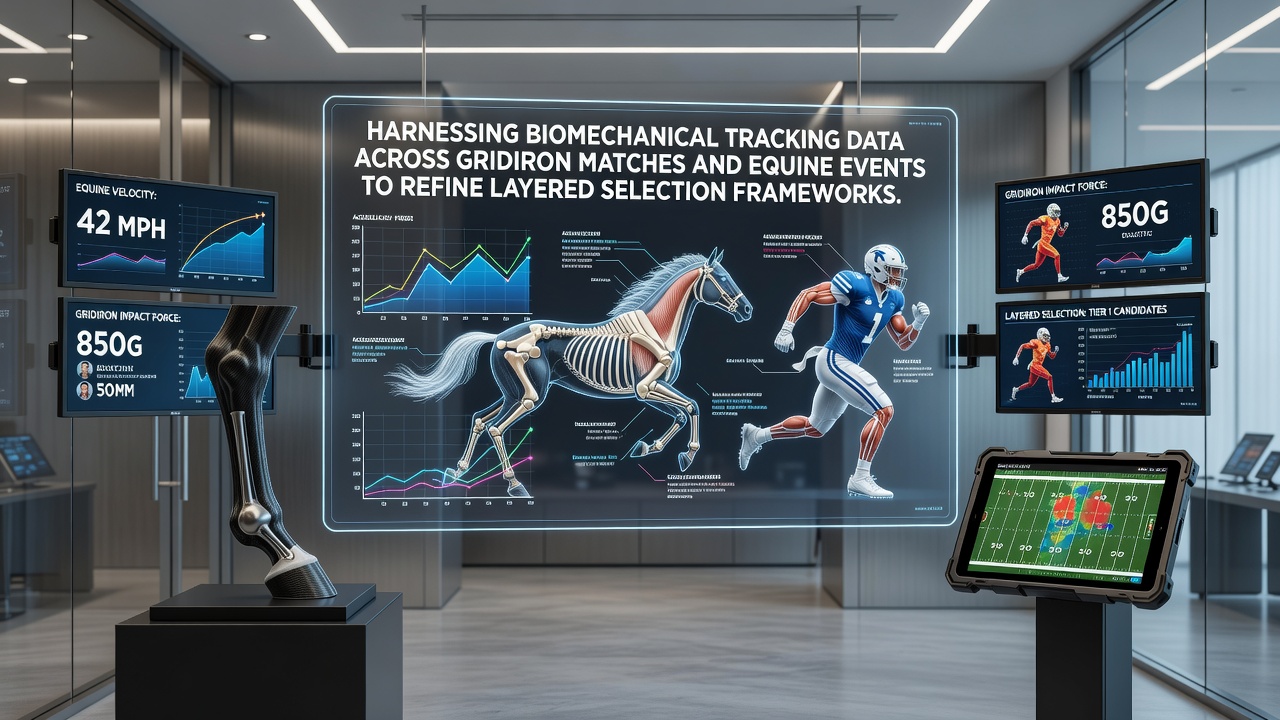
Harnessing Biomechanical Tracking Data Across Gridiron Matches and Equine Events to Refine Layered Selection Frameworks
Biomechanical tracking systems now collect detailed performance metrics from athletes and horses alike, and these datasets feed directly into layered selection frameworks that analysts use for performance forecasting. Gridiron matches generate high-resolution data on player acceleration, deceleration forces, and directional changes through wearable devices and stadium cameras, while equine events record stride length, ground reaction forces, and gait symmetry via saddle-mounted sensors. Integration of both streams creates multi-dimensional models that refine bet selection by highlighting patterns in fatigue, recovery, and peak output across different event types.
Gridiron Data Collection Methods
Professional leagues in North America deploy radio-frequency identification tags and optical tracking cameras that capture player movements at up to 100 frames per second. These systems record linear and angular velocities, impact magnitudes, and positional heat maps throughout every play. Teams and third-party analysts combine the raw outputs with historical injury records to generate probability scores for individual and team output in upcoming fixtures. The resulting layered frameworks assign weighted values to metrics such as explosive power retention and directional agility, allowing selectors to rank matches according to expected performance consistency rather than surface-level statistics alone.
Equine Tracking Technologies
Racecourses across Europe, Australia, and North America have adopted inertial measurement units attached to saddles or horses' girths that measure stride frequency, vertical displacement, and lateral balance. Heart-rate monitors and GPS units add cardiovascular load and speed-over-ground data during training and competition. When aggregated, these variables reveal how individual horses respond to track surfaces, distances, and race pace scenarios. Analysts incorporate the outputs into selection models that compare biomechanical efficiency across fields, identifying entrants whose movement profiles align with specific race conditions.
Cross-Sport Integration Techniques
Frameworks that merge gridiron and equine datasets apply common statistical layers such as force-production decay curves and recovery indices. Researchers map equivalent variables, for example treating a defensive lineman's short-area burst as analogous to a sprinter's break from the starting stalls. Machine-learning algorithms then test correlations between these metrics and subsequent results, producing confidence intervals for each selection. Observers note that such cross-domain mapping expands the pool of comparable events, allowing layered accumulators to include both football games and horse races within the same structure while maintaining consistent risk parameters.

Applications in June 2026
By June 2026 several racing jurisdictions and professional football leagues had standardized data-sharing protocols with independent analytics providers. This alignment enabled real-time ingestion of biomechanical streams into public-facing prediction platforms. Selection frameworks updated daily now flag matches where recent training data indicates elevated injury risk or suboptimal gait symmetry, shifting implied probabilities away from historical averages. Industry reports from the International Federation of Horseracing Authorities document measurable improvements in forecast accuracy after biomechanical layers were added to existing statistical models.
Validation Through Academic and Regulatory Sources
Peer-reviewed studies published by North American and European sports-science institutions have examined the predictive value of combined datasets. One analysis from the University of Calgary tracked force-plate outputs from both football players and thoroughbreds over multiple seasons and found statistically significant links between pre-event biomechanical profiles and competition outcomes. Regulatory bodies in Australia and Canada require transparency in how performance data influence betting markets, prompting operators to publish methodology summaries that reference the same tracking variables. These requirements have encouraged further refinement of layered frameworks to ensure selections remain grounded in observable physical metrics rather than narrative factors.
Future Data Layers and Model Refinement
Additional sensor types, including electromyography patches and pressure-mapping insoles, continue to enter both sports. Analysts anticipate that inclusion of muscle-activation timing and hoof-pressure distribution will add another tier to existing selection models. Early pilot programs in 2026 already demonstrate how these variables interact with established acceleration and stride data, producing tighter confidence bands around expected performance ranges. The expansion supports more granular accumulator construction across gridiron and equine events without altering the underlying risk architecture.
Conclusion
Biomechanical tracking supplies quantifiable inputs that layered selection frameworks translate into performance forecasts for both gridiron and equine competitions. Continued standardization of data protocols and expansion of sensor capabilities sustain incremental improvements in model precision. Observers monitoring developments through mid-2026 report that frameworks incorporating these physical metrics maintain consistent alignment with observed results across multiple jurisdictions and event formats.