Charting Midweek Fixture Fatigue Patterns Across Continental Leagues and Turf Circuits
Written by Sofia Hartmann · May 17, 2026
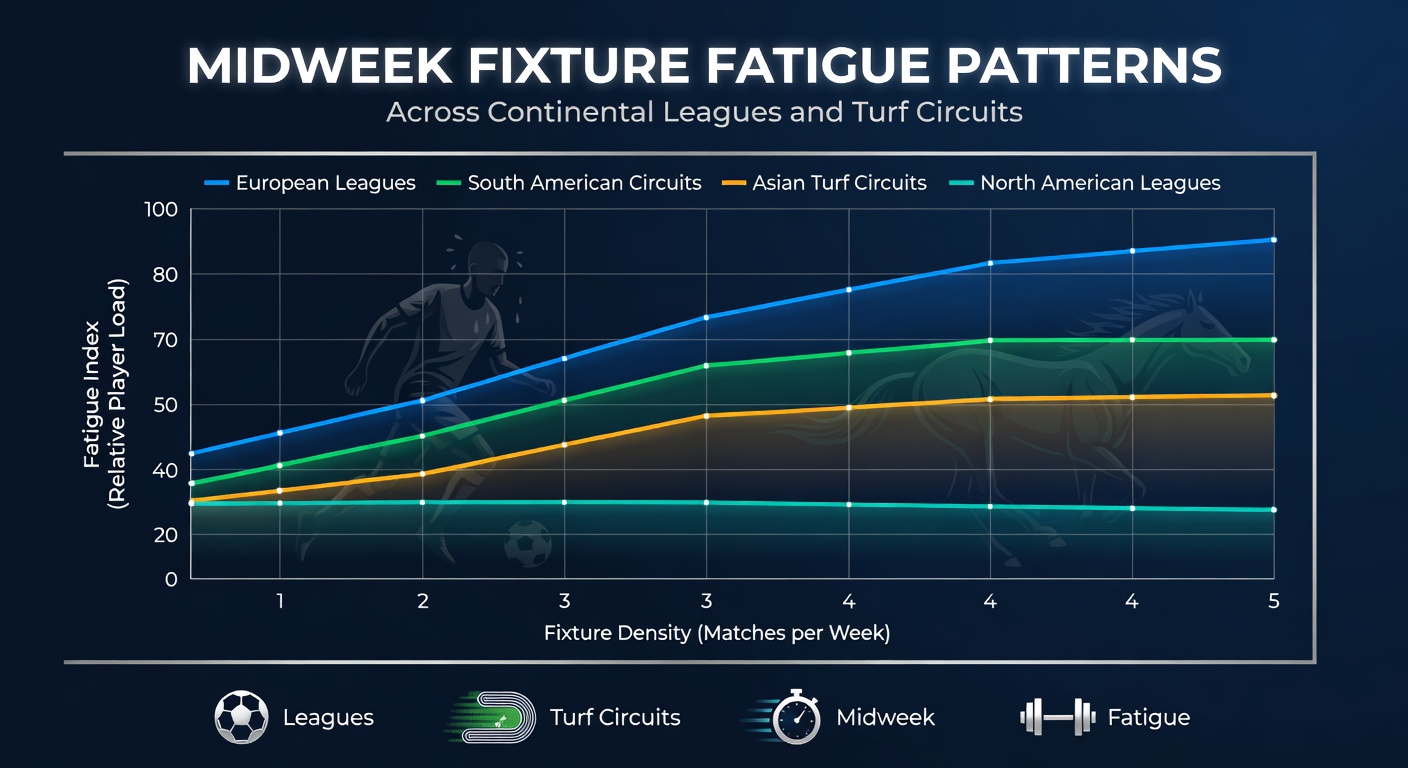
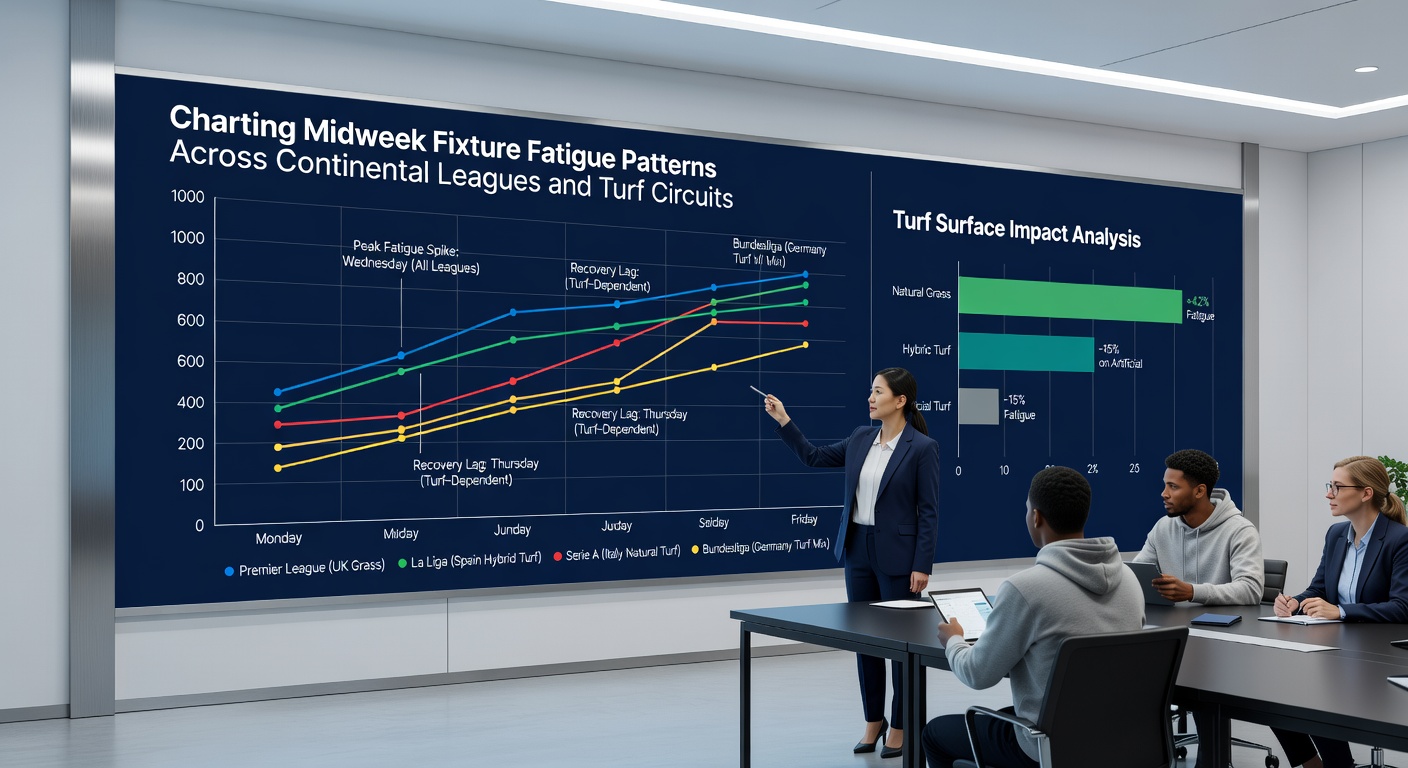
Charting Midweek Fixture Fatigue Patterns Across Continental Leagues and Turf Circuits
Midweek schedules create distinct fatigue signatures that observers track through performance metrics in both football and horse racing, and these patterns emerge clearly when continental leagues compress their calendars around European competitions. Teams in Serie A and La Liga often log extra travel hours during March and April while domestic cups add further strain, yet the effects surface most reliably in the days following those midweek commitments. Data from the 2025-2026 campaign shows recovery windows shrinking to under 72 hours for several squads, which produces measurable drops in high-intensity running distance and pass completion rates during the subsequent weekend round. Researchers monitoring Bundesliga clubs have documented similar trends, noting that squads playing Tuesday or Wednesday European ties post lower expected goals totals on Saturday. The same datasets reveal that central midfielders cover 8 to 12 percent fewer meters in the first half after a midweek outing, a pattern that holds across multiple seasons. Continental schedules in May 2026 intensify these pressures because the final league fixtures overlap with knockout stages in the Champions League and Europa League, leaving limited rest before decisive domestic matches.Tracking Recovery Indicators in Football Leagues
Coaches and analysts rely on GPS data and heart-rate variability readings to chart how quickly players return to baseline after midweek exertions. In Ligue 1, clubs that rotate fewer than four starters following a European fixture record a higher incidence of second-half substitutions, and league tables from the past five years confirm a modest but consistent decline in points per game under these conditions. External competition calendars from UEFA compound the issue when travel crosses time zones, extending the physiological cost beyond simple match minutes.
Observers note that defensive lines suffer most visibly, with increased errors in build-up play appearing 48 to 60 hours post-midweek game. Training load management programs now incorporate specific protocols that adjust intensity on Thursday sessions, aiming to preserve freshness for the weekend. These adjustments have become standard across top divisions, yet the underlying fatigue curves remain predictable when fixture density rises.
Patterns Emerging on Turf Circuits
Horse racing calendars mirror many of the same compression effects, particularly on European turf circuits where midweek meetings at venues such as Chantilly and Baden-Baden slot between weekend festivals. Trainers report that horses racing on Wednesday or Thursday show elevated recovery times when the next start falls within five days, and speed figures from the past two seasons indicate a measurable dip in final sectional times under these constraints. The pattern appears strongest in middle-distance events where sustained effort taxes both cardiovascular and musculoskeletal systems.
Stallion and mare records compiled by the International Federation of Horseracing Authorities demonstrate that three-year-olds carrying peak weights experience the most pronounced slowdown when schedules tighten. Handlers who insert an extra day of lighter canter work between outings often stabilize performance numbers, yet the broader calendar still forces some animals into tighter turns during spring and early summer blocks. In May 2026 the French and German turf programs again feature clustered midweek cards that overlap with major weekend targets, creating a natural laboratory for studying cumulative load.
Cross-Sport Comparisons and Regional Variations
Comparative reviews highlight that football teams operating on shorter recovery cycles exhibit fatigue markers similar to those seen in thoroughbreds after successive midweek races. Both domains show elevated soft-tissue injury rates when rest intervals drop below three full days, and sports science groups tracking these variables across borders note consistent thresholds. Australian researchers examining parallel schedules in southern hemisphere racing have identified analogous drops in stride efficiency, suggesting the phenomenon transcends geography when fixture density increases.
European club associations have begun publishing aggregated workload summaries that allow direct comparison between domestic leagues and concurrent continental obligations. These reports indicate that clubs with larger squads maintain steadier output across the season, while smaller rosters display sharper performance variance in the weeks after midweek commitments. Turf authorities in Germany and Italy have adopted parallel monitoring frameworks, sharing anonymized sectional data that helps trainers refine rotation strategies.
Seasonal Peaks and Forward Planning
May 2026 stands out because multiple leagues conclude their campaigns within a narrow window that also hosts the final rounds of European competitions and several high-profile racing festivals. Fixture planners at league level now factor in historical fatigue data when setting kick-off times, and governing bodies review travel logistics more closely to mitigate cumulative strain. The resulting schedules still contain unavoidable clusters, but the transparency around expected recovery demands gives teams and trainers clearer parameters for preparation.
Longitudinal studies continue to refine these models by layering GPS outputs, blood markers, and race timing data into unified dashboards. Patterns that once appeared anecdotal now register as repeatable curves, allowing more precise forecasting of when performance dips are most likely to appear. The same datasets feed into broader discussions about calendar reform, though current structures remain shaped by commercial and broadcast priorities that limit major overhauls.
Conclusion
Charting midweek fixture fatigue across continental leagues and turf circuits produces consistent, measurable signals that both football and racing communities monitor closely. Recovery timelines, performance decrements, and injury correlations follow predictable trajectories once fixture density exceeds certain thresholds. As May 2026 approaches, these patterns will again be tested under compressed schedules, offering fresh data points that refine existing models and support evidence-based adjustments to training and racing programs.