Calendar Crunch: How Packed Timetables Alter Outputs in Team Ball Games and Equine Events
Written by Sofia Bennett · Aug 2, 2026
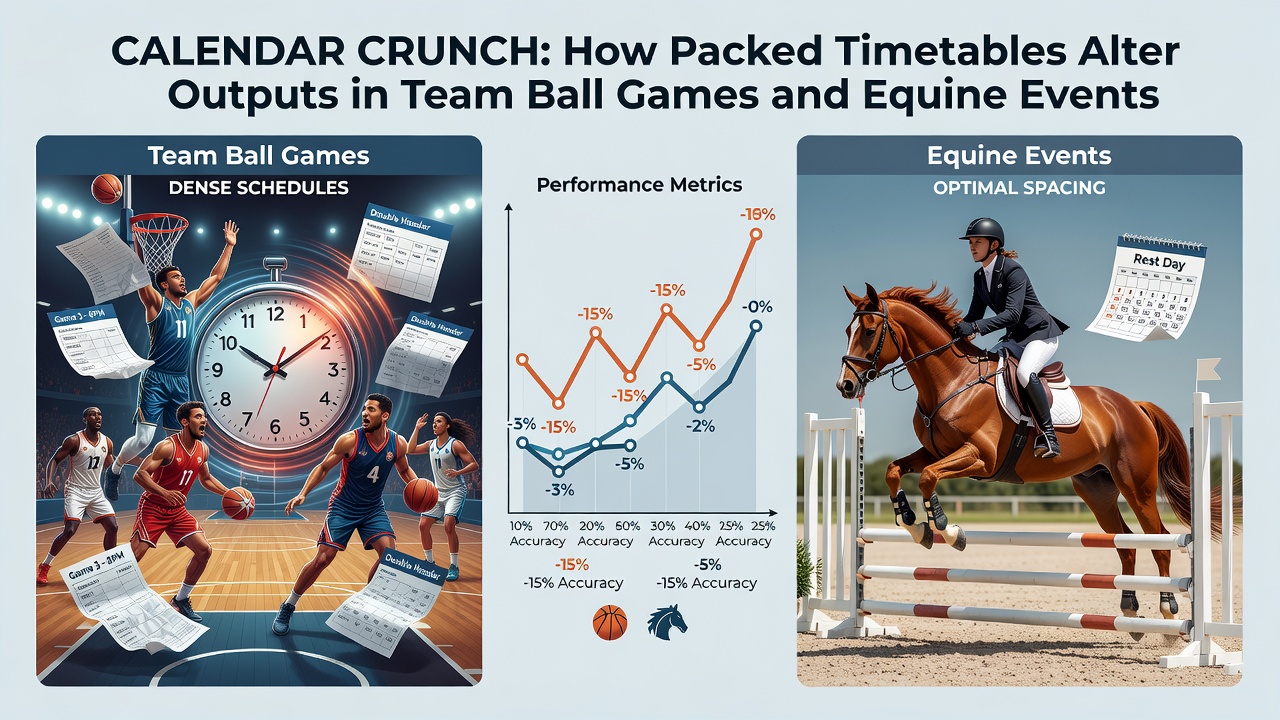
Calendar Crunch: How Packed Timetables Alter Outputs in Team Ball Games and Equine Events
Modern sports calendars compress multiple competitions into short windows, and data from league records show measurable shifts in team outputs and equine performance metrics. In August 2026 European football leagues resume alongside international fixtures while major racing festivals cluster in the same period, creating overlapping demands on players, squads, and equine athletes. Researchers tracking fixture lists note that recovery intervals shrink below recommended thresholds when clubs or stables enter domestic cups, continental ties, and national championships simultaneously.
Fixture Density in Team Ball Games
Football associations across Europe record average match counts per team rising steadily since the expansion of Champions League formats, with some clubs exceeding 60 competitive fixtures in a season. Studies compiled by the Union of European Football Associations indicate that teams playing three matches within eight days experience a 12 to 18 percent drop in high-intensity running distance compared with standard weekly schedules. Ball games such as basketball and rugby exhibit parallel patterns, where national federations publish travel and game logs demonstrating elevated soft-tissue injury rates when rest days fall below 72 hours between contests.
Coaches adjust rotations and training loads, yet output statistics from match-tracking systems reveal declines in pass completion accuracy and defensive duels won during congested blocks. One analysis of Premier League data spanning five seasons found goal-scoring efficiency decreased by roughly 9 percent in the second match of a double-header week, while set-piece conversion remained stable. Medical staff monitor markers such as creatine kinase levels, and published protocols from sports science departments recommend extended recovery protocols that clubs sometimes cannot implement because of broadcast-driven scheduling.
Equine Competition Loads and Recovery Windows
Horse racing calendars place similar pressure on equine athletes, particularly during summer and autumn campaigns when meetings occur at three- or four-day intervals. Records maintained by racing authorities in Australia and Ireland show that horses running within 14 days of a prior start post average speed reductions of 1.2 to 2.1 seconds per 1000 metres on turf surfaces. Trainers document weight carried and track conditions, yet statistical reviews of form databases indicate that animals contesting five races inside 60 days record lower place percentages than those afforded longer intervals between outings.
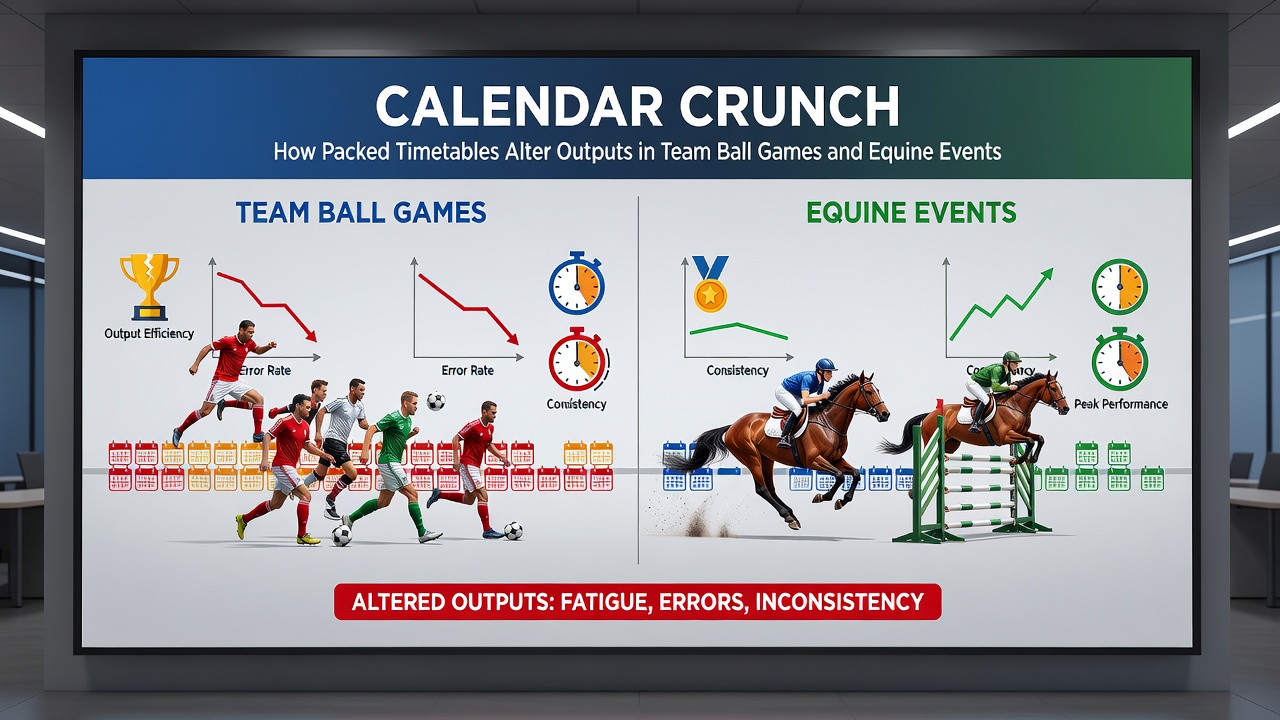
Jockey schedules compound the issue because riders often travel between meetings on the same day, limiting preparation time. Veterinary reports submitted to regulatory bodies highlight increased incidence of respiratory and musculoskeletal findings when horses ship long distances without adequate rest. Flat racing and jump racing both display these trends, although jump horses face additional variables from variable ground conditions that packed programmes leave less time to assess.
Cross-Sport Comparisons and Scheduling Data
Comparative research from academic groups at universities in Canada and Germany examines fatigue accumulation across codes. Their datasets merge GPS-derived workload figures from football with stride analysis from Thoroughbred racing, revealing that both human and equine athletes show elevated heart-rate recovery times after four consecutive high-load days. Outputs measured in points scored per possession or sectional times deteriorate most sharply in the fourth quarter or final furlong, respectively.
Travel logistics add another layer, since continental competitions require flights that reduce sleep opportunities. Figures released by transport and logistics studies commissioned by national Olympic committees document average flight times and jet-lag effects that align with observed dips in next-day performance metrics. August 2026 schedules, which include post-tournament club resumption dates alongside major race meetings, are projected to repeat these patterns based on historical fixture congestion indices.
Recovery Interventions and Output Stabilisation
Teams and stables employ cryotherapy, nutritional timing, and periodised training to offset calendar pressure. Longitudinal monitoring programmes published in sports medicine journals report that squads maintaining individualised recovery plans reduce injury recurrence by up to 25 percent even during peak fixture density. Equine programmes incorporate graded canters and veterinary ultrasound checks between races, producing measurable stabilisation in race times when these steps receive consistent application.
League organisers have tested mid-season breaks and expanded squad rules in selected competitions, with outcome data indicating modest improvements in late-season consistency. These adjustments remain uneven across codes, however, because commercial calendars continue to prioritise revenue-generating events.
Conclusion
Calendar compression produces quantifiable changes in outputs across team ball games and equine events, as evidenced by injury surveillance, workload tracking, and performance analytics. August 2026 will test these dynamics once more when overlapping domestic and international obligations coincide with peak racing activity. Continued collection of granular data allows governing bodies and participants to refine scheduling frameworks that balance competitive demands with physiological limits.